🚨BREAKING NEWS: 🔥Trump Approval Among Women Growing: Poll…
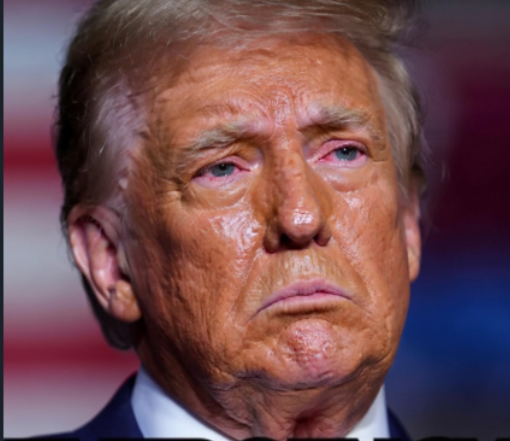
In the lead-up to the crucial 2026 midterm elections, a recent survey conducted by The Economist and YouGov has revealed a significant shift in the United States political climate. Donald Trump has experienced a five-point increase in his approval rating among female voters over the last two months, climbing from 30 percent to 35 percent.
While he remains “underwater” with a 57 percent disapproval rating in this specific demographic, the modest gain is being scrutinized by political analysts in Washington, D.C. as a potential sign of a demographic realignment. This shift is particularly noteworthy because the female voting bloc often acts as the deciding factor in battleground races that determine the balance of power within the federal government.
Despite these gains among women, the broader electoral outlook for the White House remains increasingly troubled. The national average for the president’s approval currently sits at a precarious 38 percent, with 55 percent of the public expressing dissatisfaction.
This downward trend is largely fueled by mounting public anxiety over the rising cost of living and the geopolitical fallout from the ongoing war with Iran. Unlike historical precedents where international conflicts bolstered executive support, the current conflict has failed to produce a “rally around the flag” effect, weighing heavily on the administration’s standing with independent voters and men.
Providing an academic perspective, Grant Davis Reeher, a political science professor at Syracuse University, attributes the female voter uptick to several converging external factors. He notes that the shift in media narratives away from the Epstein scandal, combined with public frustration over how Democratic leaders handled the government shutdown and Department of Homeland Security (DHS) funding, has provided the president with unexpected political cover.
Furthermore, Donald Trump’s hardline stance against Iran—a regime notorious for its repression of women’s rights—may be framing his foreign policy as a defense of global human rights in the eyes of some female voters.
However, economic sentiment continues to pose a formidable challenge to the administration’s stability. While the president uses Truth Social to herald the addition of 186,000 private sector jobs and the success of his tariffs in reducing the trade deficit by 52 percent, the public remains skeptical.
Polling indicates that 56 percent of Americans disapprove of the administration’s handling of inflation and prices, suggesting a stark disconnect between high-level economic data and the financial realities facing ordinary citizens who are struggling with basic expenses.
Data analyst Harry Enten of CNN has pointed out that the president’s current slump mirrors the sharp decline experienced by Joe Biden following the withdrawal from Afghanistan. Internal party loyalty is also showing signs of strain, with a Fox News poll indicating that Republican approval has dipped to a second-term low of 84 percent. To counter these electoral headwinds, Senate Republicans have shifted their focus toward consolidating administrative power.
By altering chamber rules to allow for the collective confirmation of executive nominees, the Republican majority successfully confirmed over 100 of Trump’s nominees this week, ensuring the administration’s influence persists as the 2026 cycle approaches.