BREAKING:🔥Trump Responds To Claim He’ll Declare National Emergency Ahead of Midterms
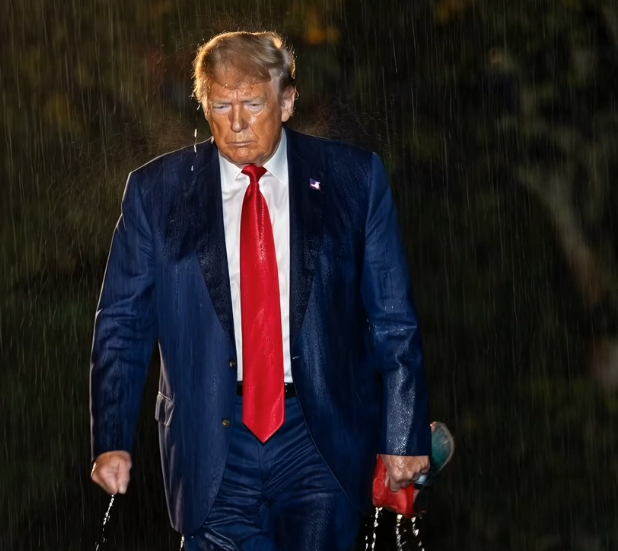
In a recent confrontation with the press, President Donald Trump categorically denied any awareness of a reported plan to declare a national emergency concerning the upcoming midterm elections. When questioned by a reporter about a circulating draft executive order, the former president responded with skepticism, questioning the source of the information and asserting that he had “never heard about it.”
This denial, however, was met with immediate public criticism from Illinois Governor JB Pritzker, a prominent Democrat and potential 2028 presidential contender, who suggested on social media that Trump was avoiding a direct refutation of the plan’s existence. The controversy stems from a detailed report by the Washington Post, which suggests that pro-Trump activists are lobbying for an expansion of presidential authority over the electoral process.
These activists reportedly aim to cite alleged foreign election interference—specifically pointing to debunked claims of Chinese meddling in the 2020 cycle—as the legal justification for such an extraordinary use of executive power. This comes as the Republican Party continues to prioritize election security, advocating for the SAVE Act and other measures intended to implement strict voter ID requirements and citizenship verification to prevent non-citizen voting, a phenomenon that critics argue is already illegal and statistically rare.
Adding weight to these reports, the legal platform Democracy Docket recently published what appears to be a 17-page draft of an executive order dated April 12, 2025. This document outlines a radical shift in how United States elections are conducted, proposing a national framework that would bypass traditional state-level administration.
Key provisions in the draft include a mandate for the exclusive use of paper ballots, the prohibition of electronic vote-counting machines, and a requirement that all election-related equipment be manufactured within the United States. Furthermore, the order seeks to impose stringent regulations on absentee voting and requires non-networked voter registration systems to prevent hacking. The proposed federalization of elections has sparked a significant constitutional debate.
Historically, the U.S. Constitution empowers individual states to determine their own election rules, leading to the diverse systems currently in place across the country. Derrick Johnson, the National President of the NAACP, condemned the proposal as “outright illegal,” arguing that the president lacks the constitutional authority to override state legislatures and Congress in this manner. Johnson characterized the move as a desperate attempt to maintain power amid shifting political tides, claiming the administration’s economic record has left them with few other options.
Conversely, supporters of the proposed reforms, such as Wisconsin Republican Bryan Steil, Chairman of the House Administration Committee, argue that such measures are essential for restoring public confidence in the democratic process. Steil emphasized that commonsense reforms like voter ID and clean voter rolls would make it “easy to vote, but hard to cheat.”
As the 2026 midterm elections approach, the tension between state-led election administration and the push for centralized federal oversight remains a focal point of the American political landscape, highlighting deep-seated divisions over the balance of power and the definition of election integrity.